How to Stop Watching Other People Live Your Dream Life - A Low Stress Creative Reset
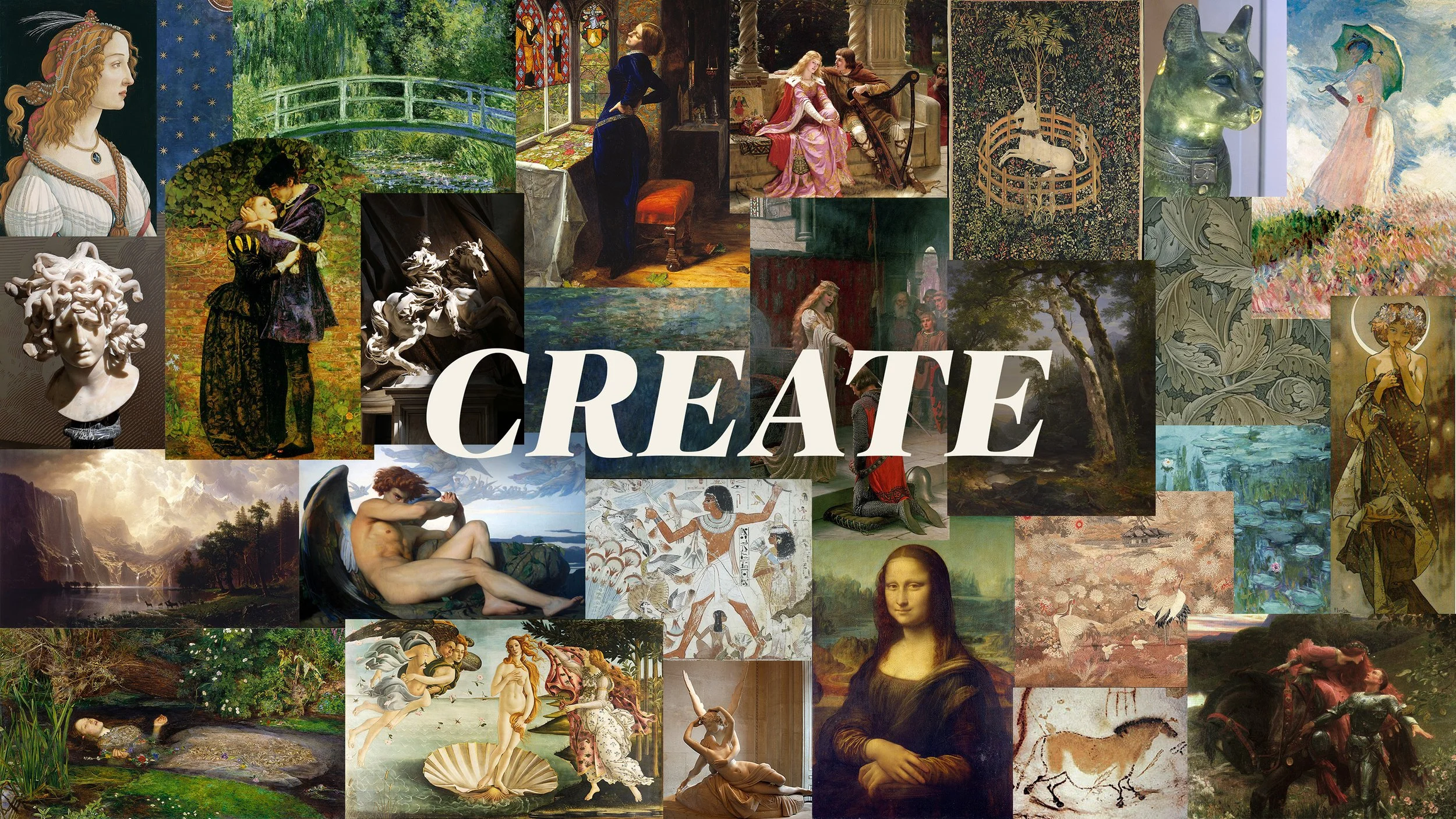
I am very lucky to have what many may consider a "dream job", but there are times when my overwhelmed gremlin brain wants nothing more than to hide in a cocoon of blankets, disassociate, and doom-scroll so late into the night that the world has no more expectations of me.
Especially when my health isn't great.
If you've been around here for a while, you probably know I have a chronic illness, and recently it has been kicking my butt more than usual.
I had to stop all my projects for two months. It completely killed my momentum and dragged my self-esteem down into the depths with it.
I found myself stuck in bed with a screen time that would make an iPad baby blush.
I know a lot of you are in this same spot. You are a creative soul, but creating doesn't feel good or rewarding anymore. So instead, you scroll.
So, if you’ve found yourself spending hours watching content from other artists doing what you wish you were doing, keep reading.
I was stuck in that pit for the past couple of months. I know how bad it feels, and I won't let you stay festering in there if I can help it.
Before We Fix The Problem, We have To Understand How We Got Here In The First Place...
Because unfortunately...
Staying up until 3 AM watching someone else build their dream life, just to wake up at 5:40 AM to go to the office... is a short-term hit of satisfaction followed by a massive kick in the teeth. And it is definitely not the "productive research" it feels like in the moment.
This is a trap that is so easy to fall into.
It's not your fault. But like every good hero’s journey worth reading, the problem might not be our fault, but it is our responsibility to vanquish it. In this case, our antagonist happens to be the united might of the “attention economy.”
You’ve probably heard that phrase thrown around all over the internet. And if you haven't, I salute you for not being as chronically online as I am.
Essentially, there is a huge, multi-billion-dollar economy that profits from keeping you stuck right where you are—constantly consuming and never having the mental space to actually create. The longer you stay, the more profit these companies make.
To keep you locked in, tech companies have engineered algorithms using the exact same psychological strategies that casinos use to keep gamblers addicted to slot machines. (No, seriously! Every time you swipe down to refresh your feed, it’s the exact same mechanism as pulling a slot machine lever. I could go on a deep dive into the variable rewards science, but we’d be here all day, and I don't want to inflict that on you.)
Mindlessly scrolling through "fast food" style content like shorts and reels completely messes with the balance of dopamine in your brain.
Dopamine is a chemical in your brain that drives your motivation. Without it, you simply wouldn't want to do anything at all. When your dopamine levels are healthy, everyday activities like reading, learning, or making art actually feel worth pursuing. It gives you the drive to get started and keeps you interested.
To oversimplify it, your curiosity and motivation run on dopamine.
Now, I am not a neuroscientist or a doctor—I'm just some girl on the internet—but let me try to explain how it works, or at least, how I understand it:
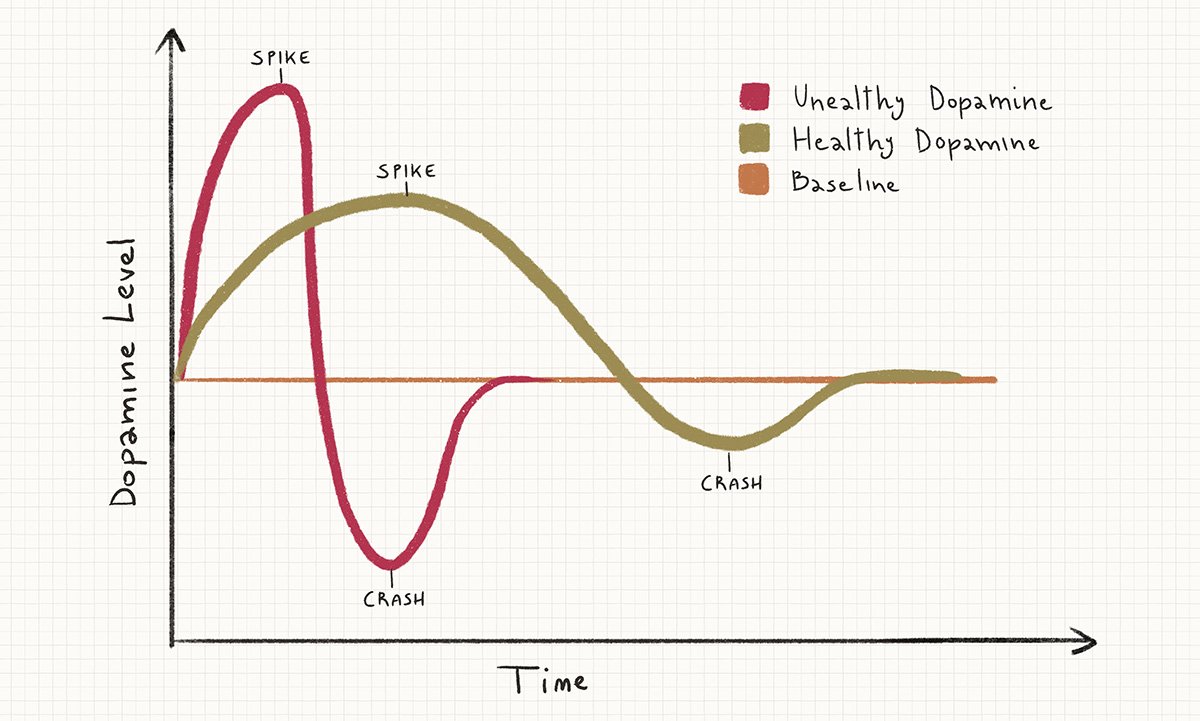
🧠 The Baseline
This is the average dopamine level in your brain at rest. It sets your basic state of motivation and energy. The higher this line is at rest, the easier it is for you to feel motivated in general.
📈 The Spike
Whenever your brain spots something new and interesting, your dopamine levels rise. This gives you the push to actually seek out that thing.
📉 The Crash
To keep a healthy balance, your brain lowers your dopamine levels a bit right after a spike before returning back to your normal baseline.
This is the healthy way dopamine responds. But here is what happens when we plug into the doom-scroll machine to drown our sorrows in sweet, sweet dissociation:
The Risk of Too Much Dopamine
When you're constantly scrolling through TikTok or Instagram, you're hitting your dopamine system over and over without letting it recover. To cope with being constantly overstimulated, your brain protects itself by cutting back on its dopamine receptors.
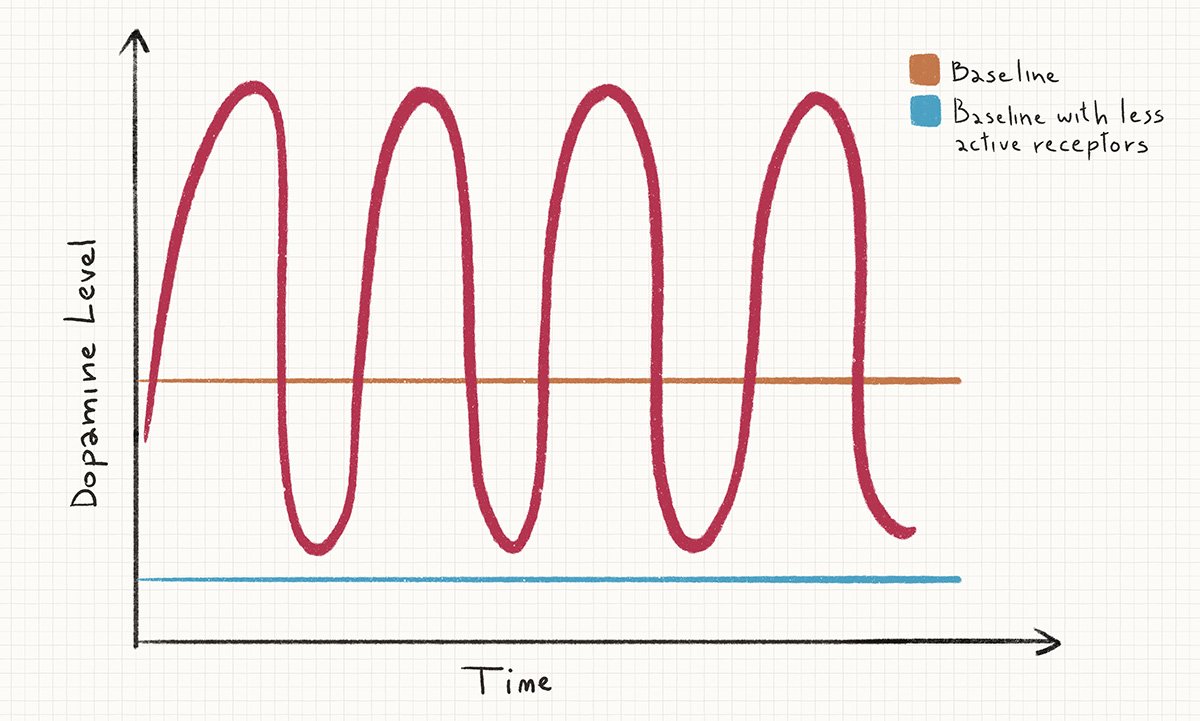
Dopamine baseline lowering after binge scrolling on reels.
Oversimplifying it: you become resistant to your own dopamine. It’s still floating around in there, but your brain literally can't feel it anymore.
And that is why everyday life suddenly starts to feel like an empty void. Because you've gotten used to extreme, artificial spikes, normal activities—like working on your art, building your business, or going on that mental health walk (which, frustratingly, actually does help)—no longer seem worth the effort.
Your new minimum dopamine threshold is sky-high, and the only thing engineered to meet it is the algorithm. Nothing else stands a chance.
Ok, So… How Do We Fix This Mess? - The Experiment
As someone who is highly emotional and self-critical, I found that learning the science behind all of this helped me immensely.
There is something incredibly comforting about knowing that some of my struggles and self-doubt are just the result of faulty chemistry—not fundamental character flaws. (Thank you, science!)
Before I dived into this research in a bout of productive procrastination, I was feeling so drained and empty all the time.
I genuinely believed I had zero mental energy left to create, and that the joy was just gone. It made me question all of my life choices, sending me into a Category 5 hurricane of a downward spiral.
Intellectually, I knew without a doubt that I love my creative business and that I'm incredibly lucky to have it. But emotionally… I was completely hollowed out.
Once I learned about the lovely side effects of trashed dopamine levels—and found the courage to check my actual screen time for a massive reality check—I decided to put this knowledge to the test and try an experiment.
It started out pretty simple and, like most of my endeavors, completely disorganized. I gave myself just one golden rule: Create more than you consume. Notice I didn't say "finish the project" or "design X number of new fabric patterns for the shop." Just create.
Whether it was drawing, writing in my journal, or making cake from scratch.
It didn't matter what it was or how it turned out, as long as the process felt good.
And listen, I am figuratively holding your hand as I type this. Because I know there is a voice inside your head right now, kicking and screaming, throwing out excuses about how long you’ve been putting off X, Y, and Z, and telling you that you just need to be productive and get. it. done. already.
I see you. But for your own good—unless you are facing a literal, hard deadline for school or a client—that inner critic voice can go back to screaming into the void for a little while longer.
With that first rule, “Create more than you consume,” guiding the way like a shiny north star, I created a low-stress intervention plan to help me reset. Here is exactly how I did it:
1. Do a 1 to 7-Day Detox (But Make It Realistic)
We’ve all heard this advice a million times, yet somehow we never manage to stick to it. And it's not because we lack the willpower or the intelligence to figure it out—it's because standard detox advice completely ignores why we are glued to our screens in the first place.
The typical advice is:
Give your brain a break from high-stimulation apps to reset your baseline. Delete them or leave your phone in another room to create friction. But going cold turkey like that never worked for me, because it didn't address the root cause of my scrolling.
The actual plan that worked for me:
Running your own creative business can be incredibly isolating. It genuinely makes you feel like the rest of the world is playing a completely different version of reality than you are. I realized I don't just scroll for because I am lazy—I do it because I need noise. I need company. I need to feel like I am not entirely alone with my thoughts and goals.
I can’t exactly just get up and go to cowork at a cute cafe every day, either. I live in the middle of rural Skyrim. There are no cafes within reasonable walking distance, and most of my neighbors are literally sheep (which I love but sadly don’t make very good conversation partners). So, instead of a brutal digital ban, I changed how I used my screens.
I stopped mindless scrolling, and instead, I leaned heavily into "study with me" videos and content that actually inspired me to take action as I watched.
Just a few examples:
Study/work with me videos with Pomodoro timers
Plan with me videos to get organized
Follow along tutorials (painting, knitting, coding, etc.)
Longer video essays about topics I am interested in while you do chores
Essentially, I used my screen time as active coworking time. It changed the entire focus from passive consuming to doing something together. And there are a million ways to do this—live streams, pre-recorded videos, or even cozy gaming!
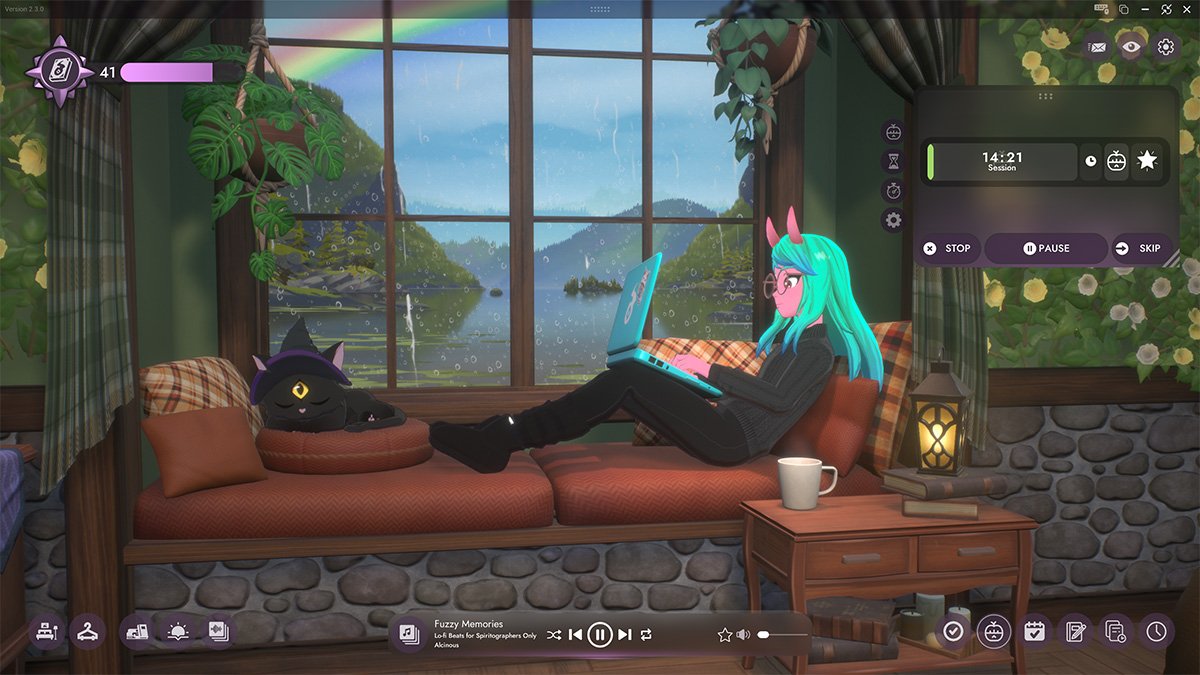
Me writing this right now blog post right now.
Although I did reduce my screen time by a significant amount, I also realized something important: I don’t actually mind having six hours of screen time a few days a week, if that screen time is productive, genuinely fun, and enriching.
2. Have an intervention activity
Every single time you get that irresistible urge to pick up your phone and scroll, you need a backup plan. The trick is to set a firm intention to do one specific thing instead. This helps you claw back control when you catch yourself trying to dissociate through your screen. Because let’s be honest—it will happen. The pull is too strong for any of us to be perfect. But if you have a game plan ready, you can catch yourself mid-swipe and stop yourself before you spend the next 3 hours scrolling… and get back on track.
Just make sure that this activity is something that actually feels good, or at least helpful. Don’t punish yourself with 50 pushups or anything extreme. You want to reward yourself for catching your bad habit, not make yourself miserable. Plus, it needs to actually address whatever emotion drove you to procrastinate in the first place.
For me, journaling is my go-to. The second I get the urge to scroll, I grab a notebook instead. I write out a messy stream of consciousness, give myself a pep-talk, map out a to-do list, or just use it as an idea bucket. It’s a zero-stress way to offload a noisy brain and step back into a creator mindset. Getting all those thoughts onto paper completely calms my anxiety. It helps me rationalize what I actually want to do, rather than letting my temporary overwhelm and emotions make the executive decisions I will regret later.
If journaling isn't your thing, here are a few other low-stress intervention activities you can try:
Move your body: Go for a quick walk if you are able to, or just do a quick two-minute stretch to get out of your head.
A five-minute tidy: Reset one small area, like your desk or the kitchen counter, to give your brain a quick, clean win.
A sensory reset: Step away and make a cup of tea, or wash your face with cold water or bother your pet for a cuddle to get back in contact with the real world around you.
Doodle with zero expectations: Grab a scrap piece of paper and just scribble, paint, or sketch without worrying about making it "art."
3. Do What You Want, Not What You "Should"
If the thought of starting a massive drawing project or working on your business makes you feel anxious right now, don’t force it. Instead, pivot to something with zero stakes. Bake a cake, clean a corner of your room, play with some cheap air-dry clay, hang a picture frame, or honestly? Just lie flat on the floor, stare at the ceiling, and listen to your own thoughts for five minutes.
All of these are valid. The goal right now isn’t to be hyper-productive; it’s just to regulate your nervous system. Once your brain feels a bit more grounded, the excitement for those bigger someday dream projects will naturally start to come back on its own.
What I Learned from this experiment
Making this change feels deeply uncomfortable at first. Sometimes we have to give ourselves a little bit of tough love before things get better.
And look, your reason for over-consuming content might be completely different from mine. Maybe you don’t need the company at all. Maybe it’s the exact opposite—you're desperately clawing for some "me time" at the end of an exhausting day, and when you finally get a free moment, the last thing you want to do is anything that feels like more work.
But the most profound thing I learned through this experiment is that whether you're turning to your phone for company or to escape, mindlessly scrolling isn't a way out. It never actually recharged my batteries, nor did it help me build the genuine connection I was craving.
Instead, I discovered that creating can be the solution we are looking for. It can actually be incredibly restful and fulfilling, and it can help you connect with people and start meaningful conversations—like I'm doing right now through this very blog.
And that healing your creativity and motivation requires real, deep rest—not just numbing out with whatever video pops up next. To get to that peaceful state, I had to learn to sit with my own mind when things got quiet, instead of instantly diverting my attention to a screen. I had to finally give my own creativity some room to breathe so I could actually hear it again.
Now that my mind and body are regulated, creating doesn’t feel like a chore anymore. It feels good. It’s genuinely fun—almost addictive in the best way possible. By giving myself a break from consuming mindlessly, I finally let my natural dopamine do its actual job: giving me the steady drive to build the life I actually love, and I know it is possible for you as well.